
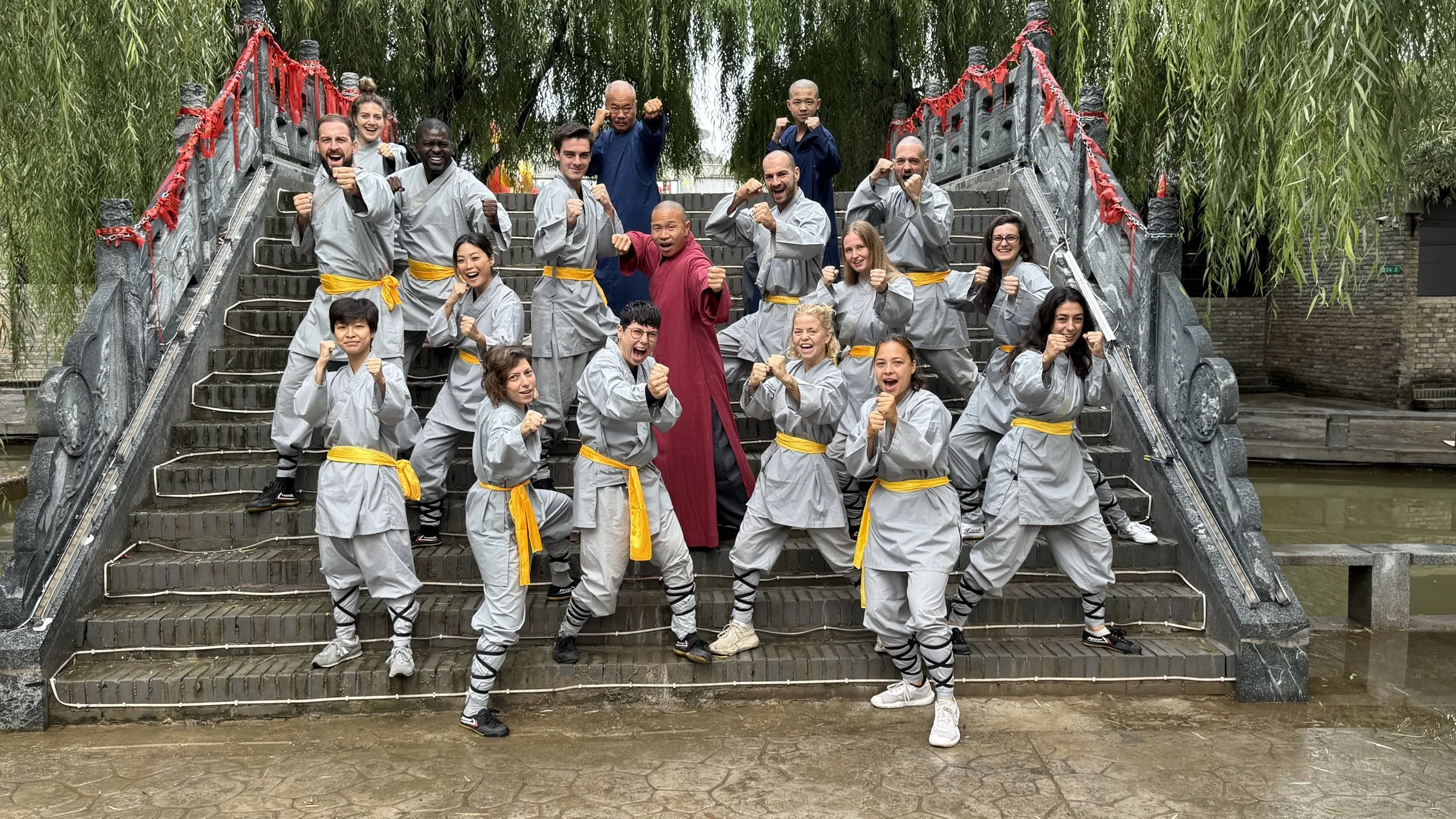
My experience spending a month training Shaolin kung-fu in rural China, from 5am Taiji sessions and acrobatics to unexpected lessons in discipline, resilience and friendship.
01- What compelled me to go?
Did anyone else have an unhealthy obsession with Jaden Smith in The Karate Kid?
Well, I was completely obsessed with that film growing up. Kung-Fu fascinated me: The discipline, the fighting forms, the weapons, the uniformity of the students training together, the seemingly punishing training regime. Everything about shaolin kung-fu just had me hooked. Having been a gymnast as a kid I no stranger to a pretty brutal training regime. In the least worrying way, I thrive off pushing my body to see what it is capable of. I was the kid in gymnastics who LOVED conditioning, A thousand press-ups followed by a thousand pull-ups? Yes, please. I guess this love of pain never really left. At 25, I am still seeking new and increasingly ridiculous ways to challenge myself.
Ironically, I was lying in bed recovering from a broken rib I’d hurt doing Brazillian jiu-jitsu when I came across a YouTube video titled 30 days Training with Shaolin Warrior Monks. One watch and an enthusiastic internet deep dive later and I’ve found the school she trained at. It dawned on me: I was an adult. I had some adult money. I could PAY to go to China and learn Shaolin Kung-Fu with actual MONKS. Without hesitation flights were booked.
Getting there was an ordeal. The visa application was probably the most confusing one I've ever done. It involved a four-hour train journey from the small Australian town I was living in to visit the Chinese embassy, approximately two folders' worth of paperwork, leaving my passport in Brisbane for a month, and a lot of praying that everything would go through. Thankfully, the school was incredibly helpful throughout the process.
But that wasn't the only hurdle… Exactly one month before my flight, with everything booked and my visa approved, I sprained my ankle on a silly trail run. Devastated doesn't quite cover it. I spent the next four weeks doing everything in my power to get it better as quickly as possible. Whether I'd actually be able to train properly was something I wouldn't find out until I arrived.
My logic was straightforward: if I could bear weight on my foot and get myself halfway across the world with all my belongings, I WAS GOING.
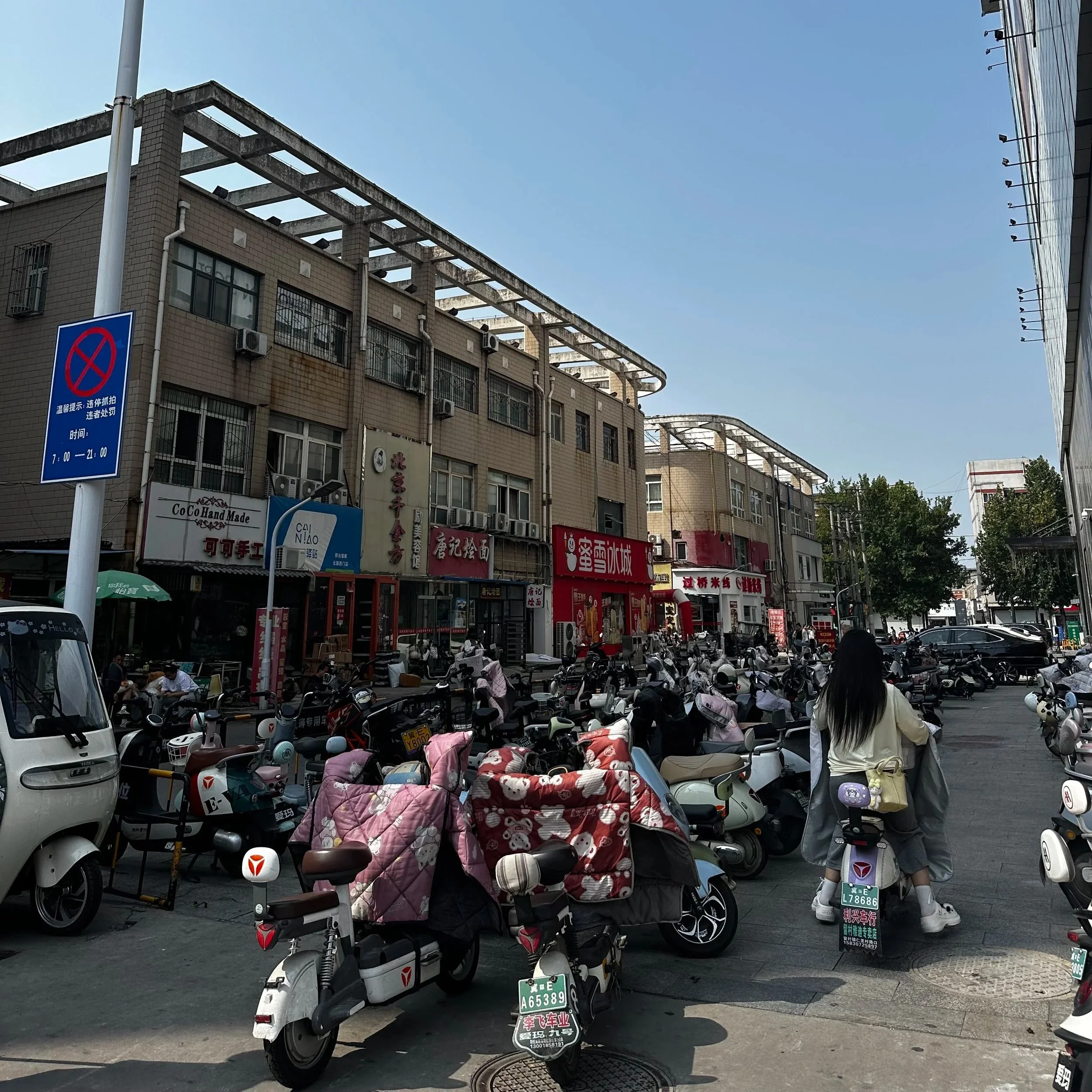
02 - Getting there…
A very sleep deprived Elsa arrived in Beijing, alone but full of optimism anticipation and excitement. I had also got a little overzealous with sleeping pills on the flight, so I was operating on considerably less brainpower than usual.
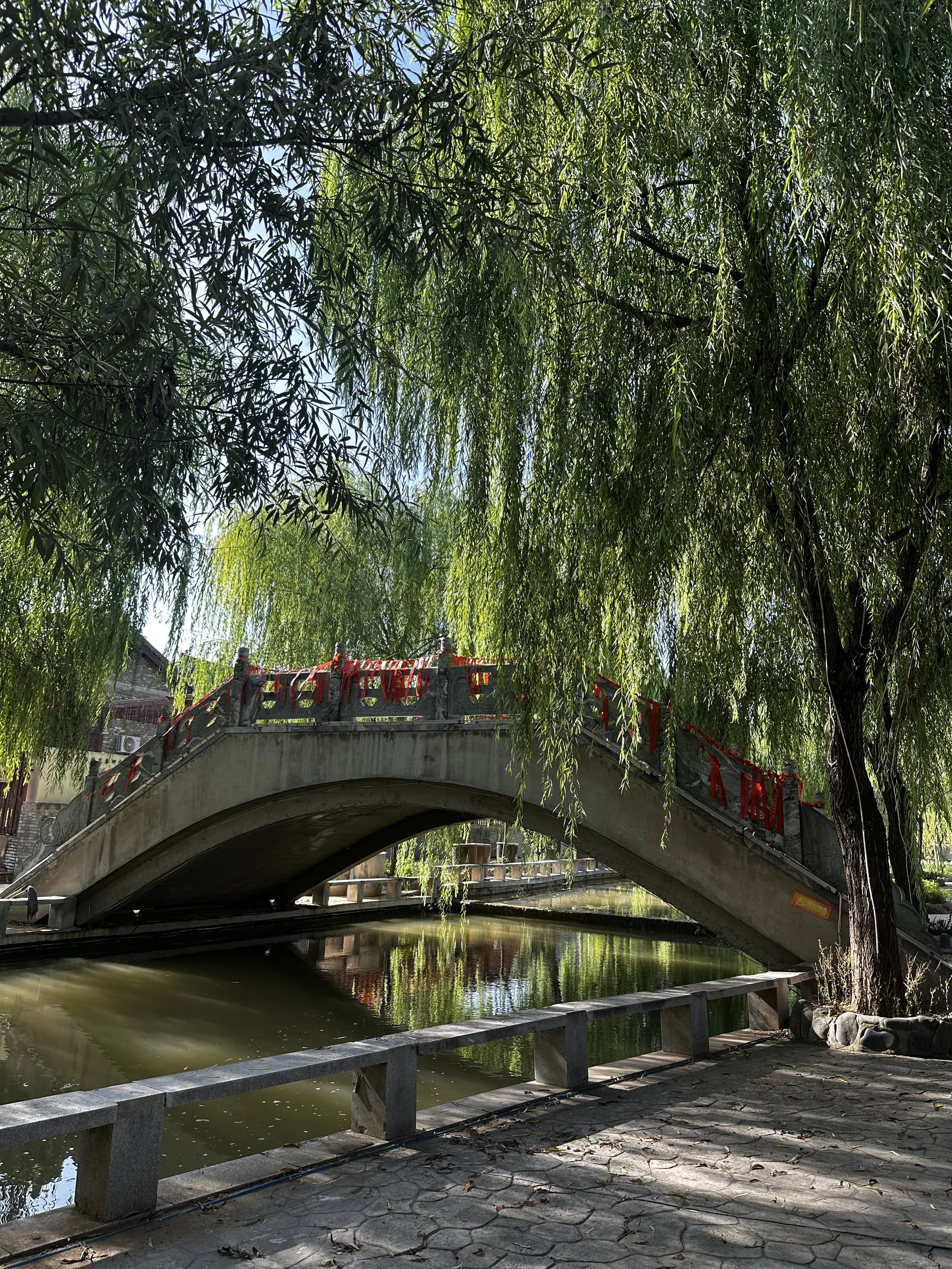
By the time I reached the school, it was dark. I was so sleep-deprived that I was doing everything in my power not to fall asleep during the final stretch of the journey. I vaguely remember stumbling through the school grounds at night, navigating a series of stepping stones that required considerably more concentration than I had available.
I was happy to be there, but mostly I was desperate for a bed and somewhere to put down my ridiculously heavy backpack.
When I woke up the following morning, I was completely disorientated. Luckily, I'd arrived on a Friday night, and the students had weekends off, giving me time to settle in, meet everyone and get my bearings. It was also the first time it really hit me where I was and what on earth, I'd signed myself up for.
I was in China. I was about to spend a month training kung-fu. And I had absolutely no idea what to expect.
03 - Training with the Monks
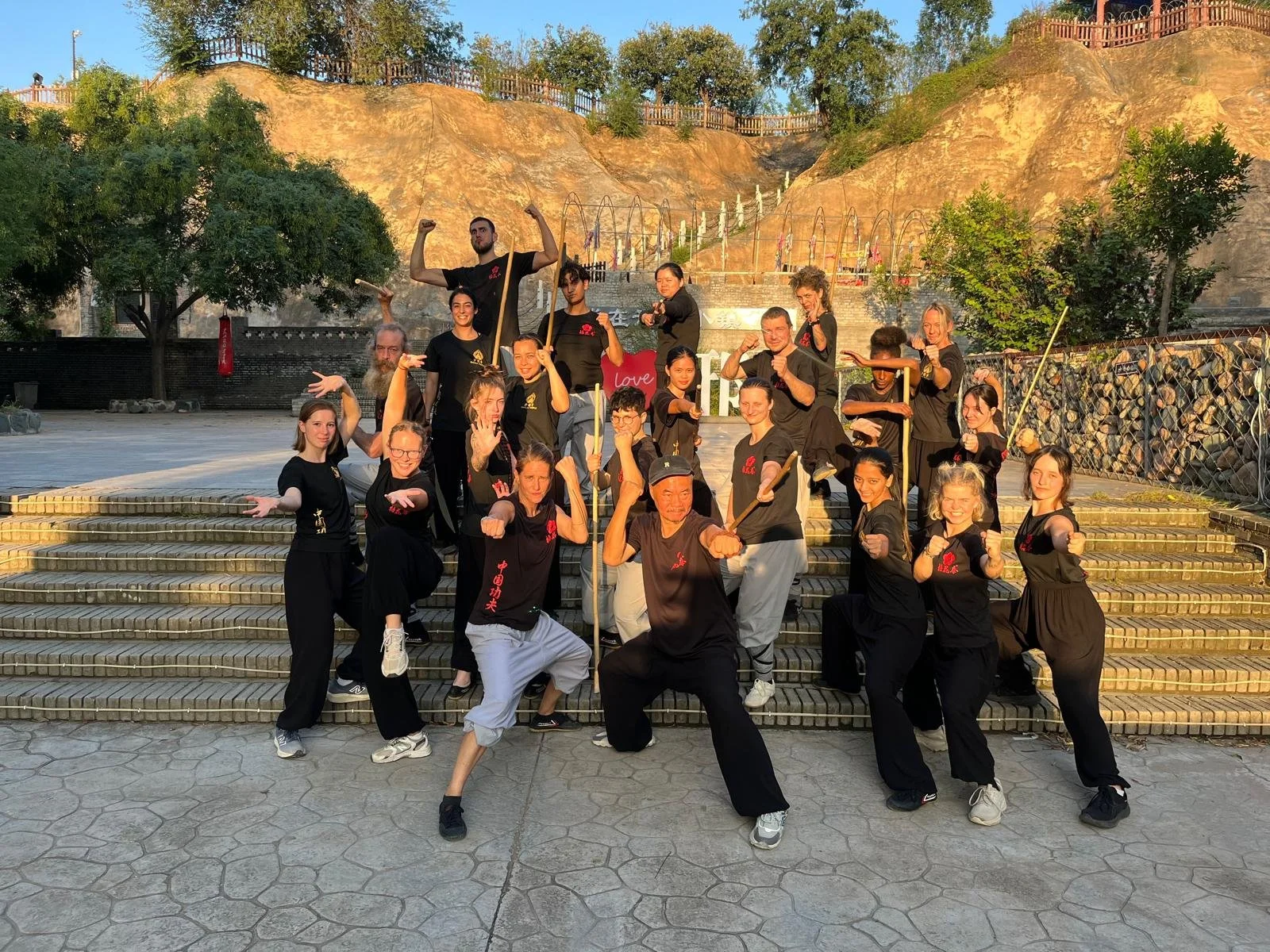
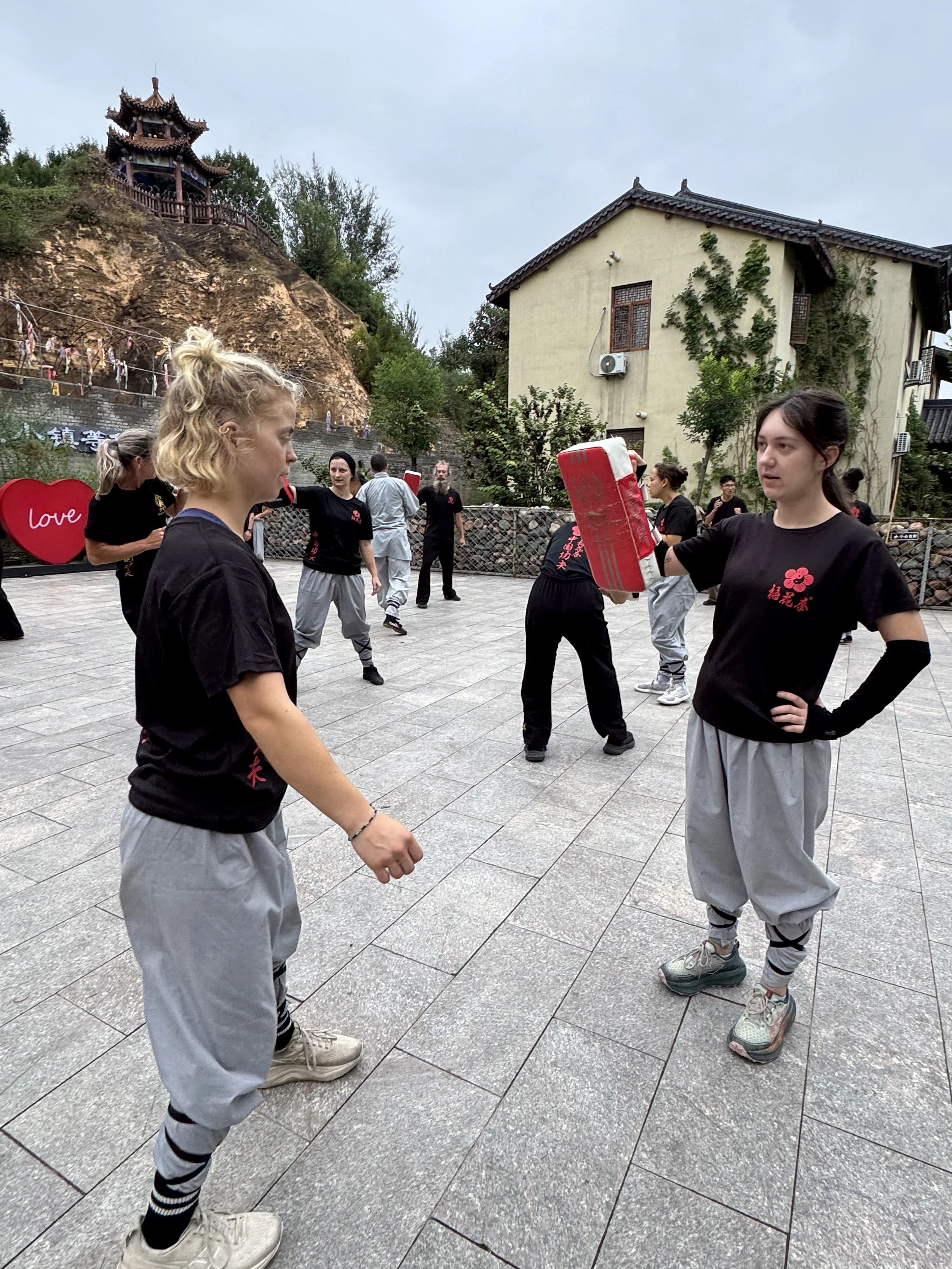
Monday came around FAST. Before I knew it, my 5am alarm was going off and I was getting ready for our first training session of the day: Taiji at 5:30am. Taiji was, by far, the hardest thing for me to learn. Unlike the other forms, which were often powerful, explosive and physically demanding, Taiji required slow, precise and calculated movements. It demanded a completely different kind of strength and concentration.
I found it incredibly frustrating how long it took me to learn the choreography. I'm used to picking up physical skills relatively quickly, and I wanted to be good at it immediately. Instead, I had to slow down, pay attention and accept that I wasn't going to master everything overnight.
Gradually, I began to understand the movements, their meaning and the importance of moving from my ‘dantian’ (the body's central energy point). By the end of my time here, something that had initially frustrated me became my favourite part of the day.
From 7:30–8:30am, we trained Meihua Quan, which translates to 'Plum Blossom Fist', a traditional Chinese martial art combining different qualities of movement into intricate, powerful sequences. The head Shifu at the school, Shifu Shi Yanjun, was a 17th-generation inheritor of Meihua Quan. In other words, a Meihua baddyyy.
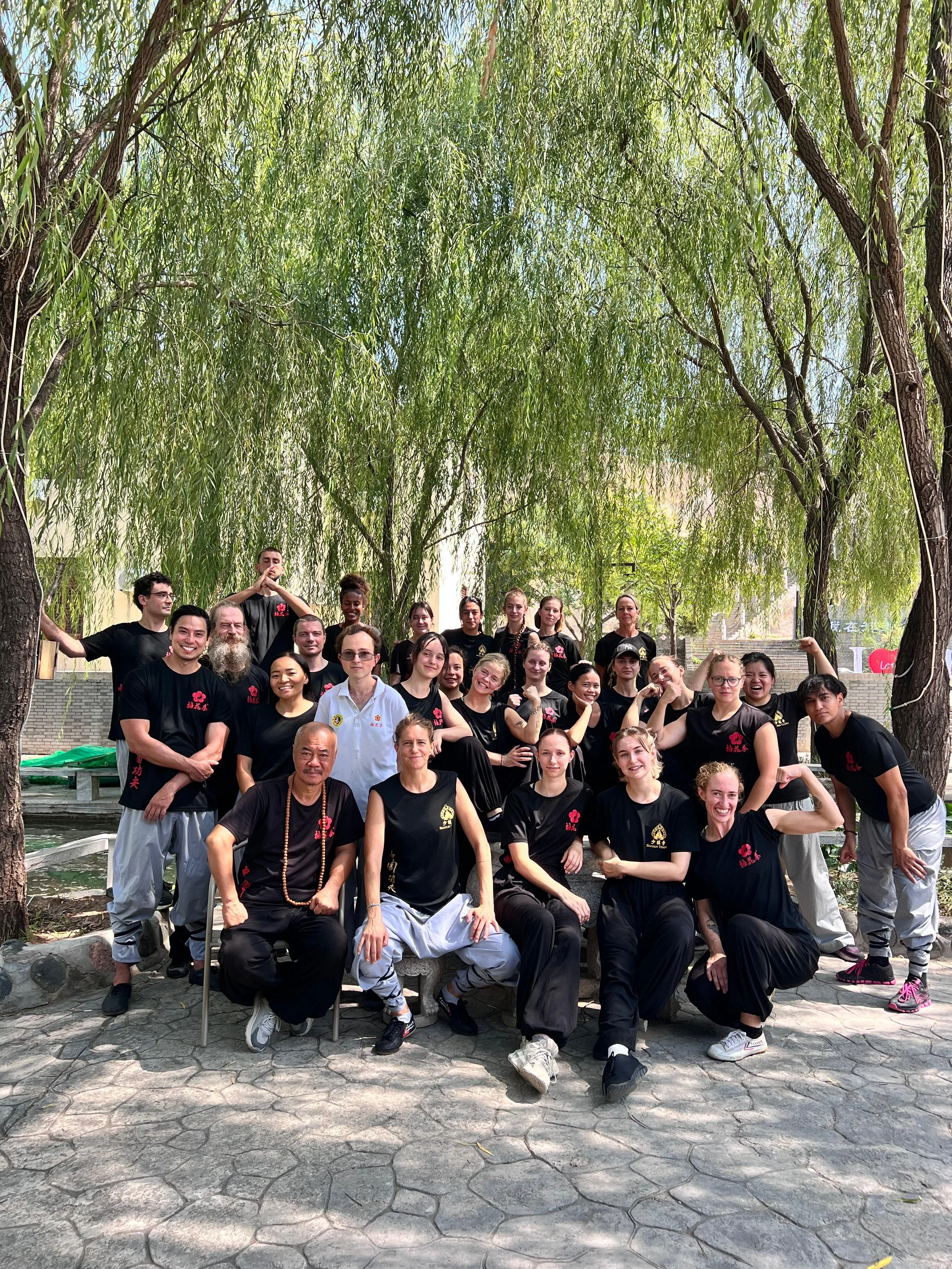
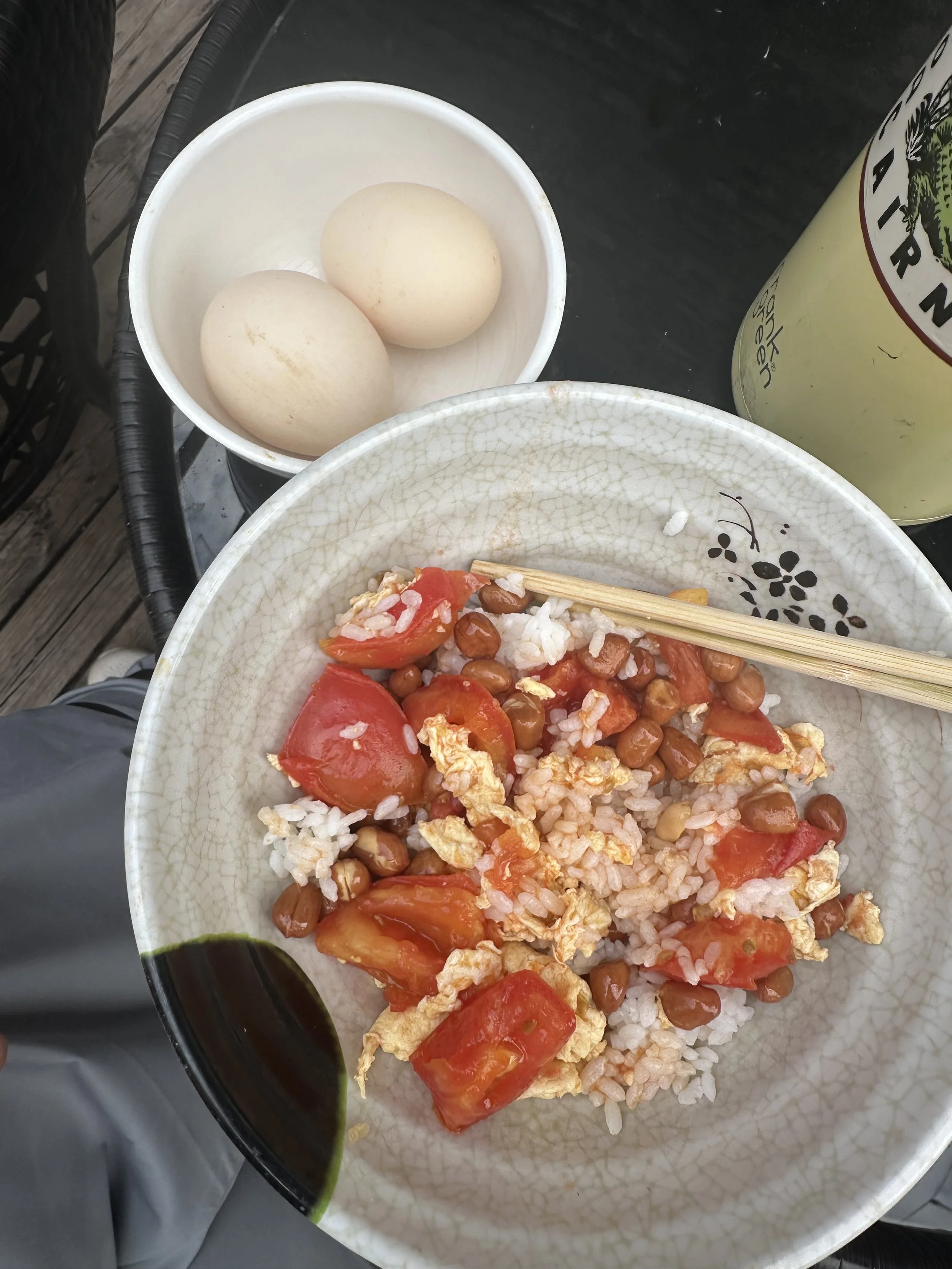
After that session, we finally got to eat! All our meals were prepared by one woman, who was quite possibly the kindest, smiliest person I've ever met. She cooked breakfast, lunch and dinner for all 50 of us, seemingly single-handedly and never without a huge smile on her face. I still don't understand how one person managed to feed that many hungry students every day.
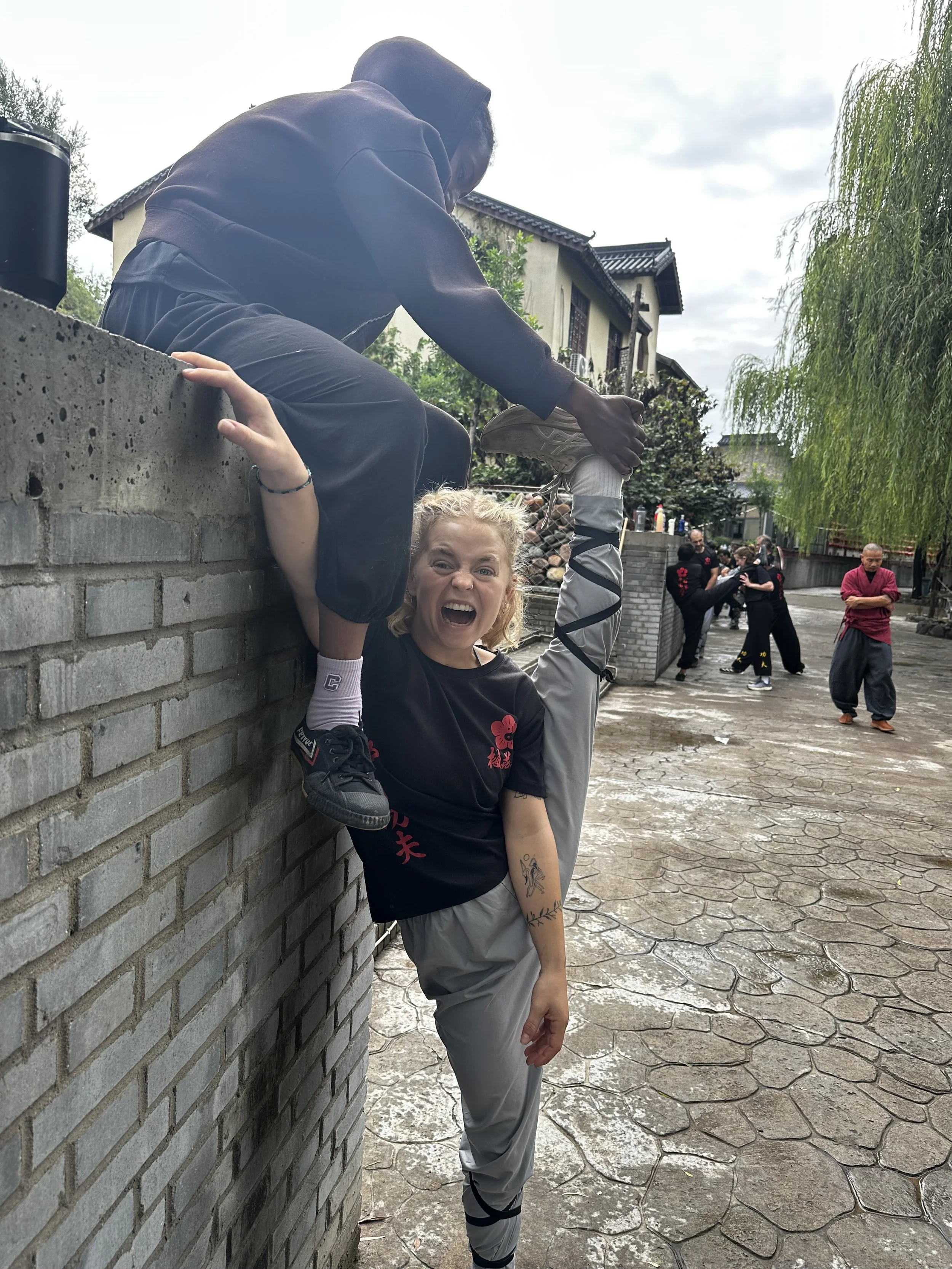
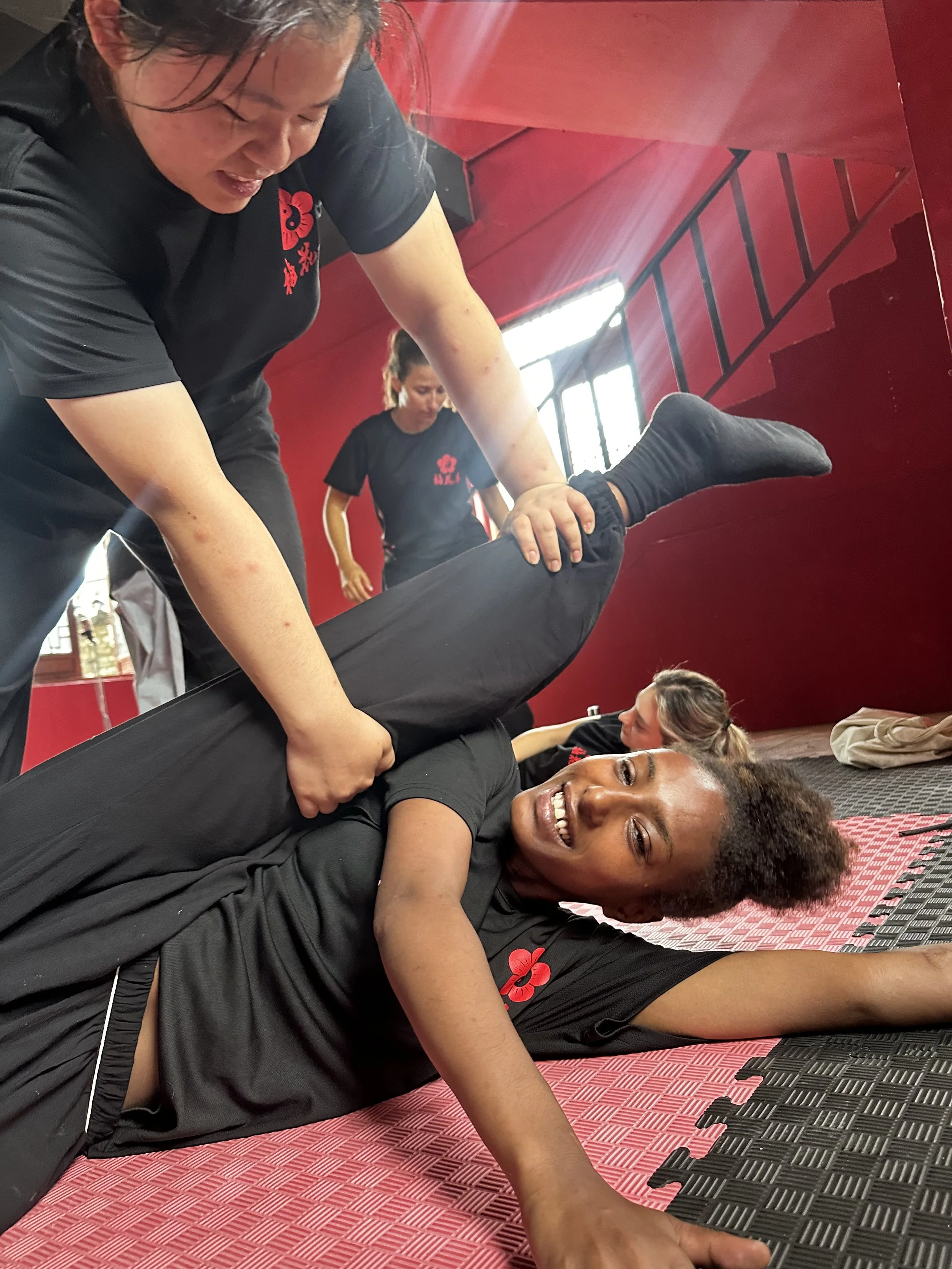
The next session varied depending on the day. Some days we had power stretching, which involved sitting on one another until somebody tapped out. Other days were dedicated to acrobatics: flips, tricks and tumbling, which, unsurprisingly, was one of my favourite sessions.
Then there was hard Qi Gong.
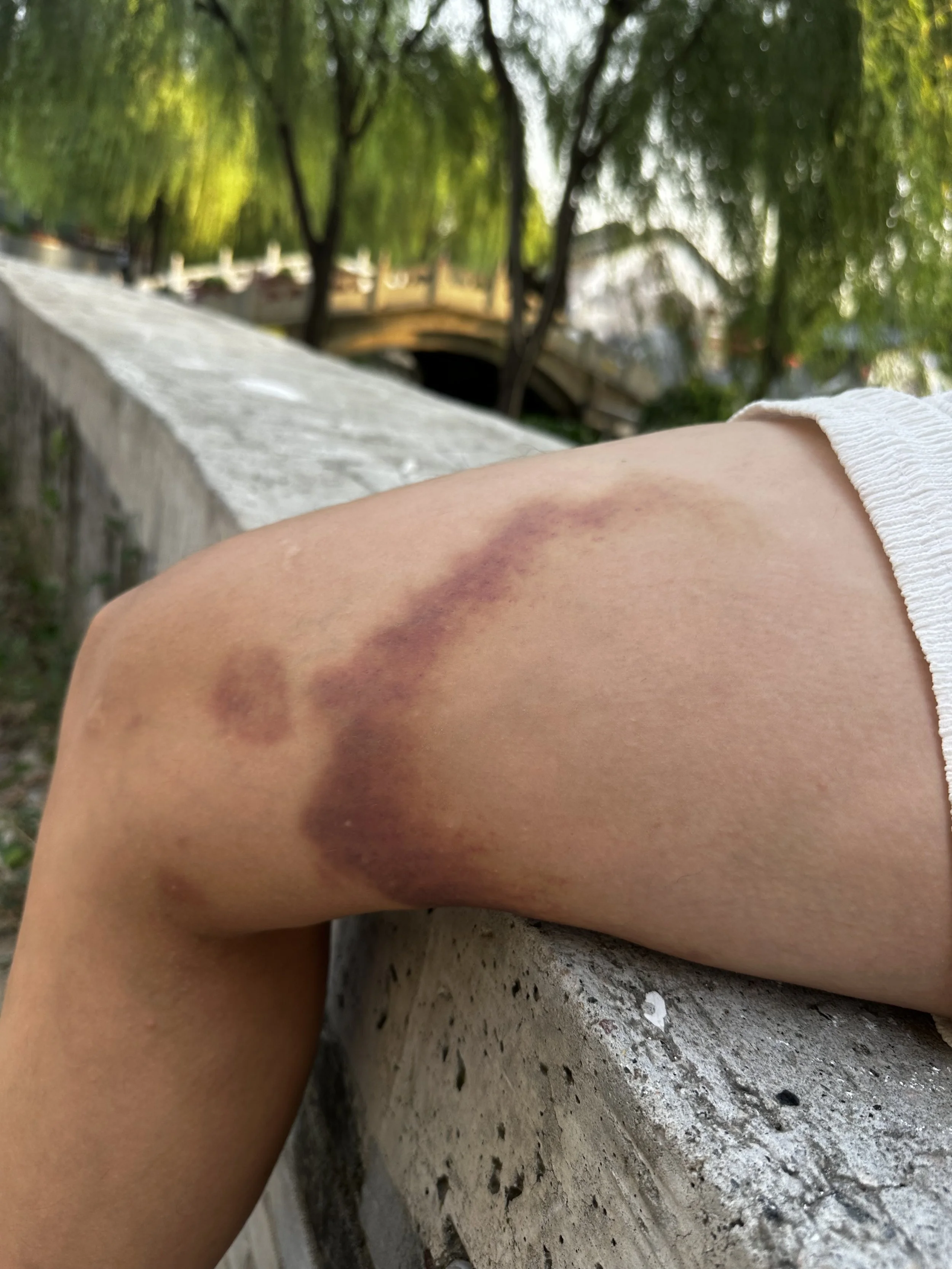
Some of you may have seen videos of this online. We would work in groups of around five, taking turns kicking and punching one another across different parts of the body while counting to 100 in Mandarin. The idea was to condition the body to withstand impact. It was undeniably painful, and it left me with a fair collection of bruises. But afterwards, my whole body would feel warm, tingly and almost on fire.
It was also where I began to understand that mental resilience isn't always about doing something spectacular. Sometimes it's about staying present through something uncomfortable, resisting the urge to give up and getting through one more round.
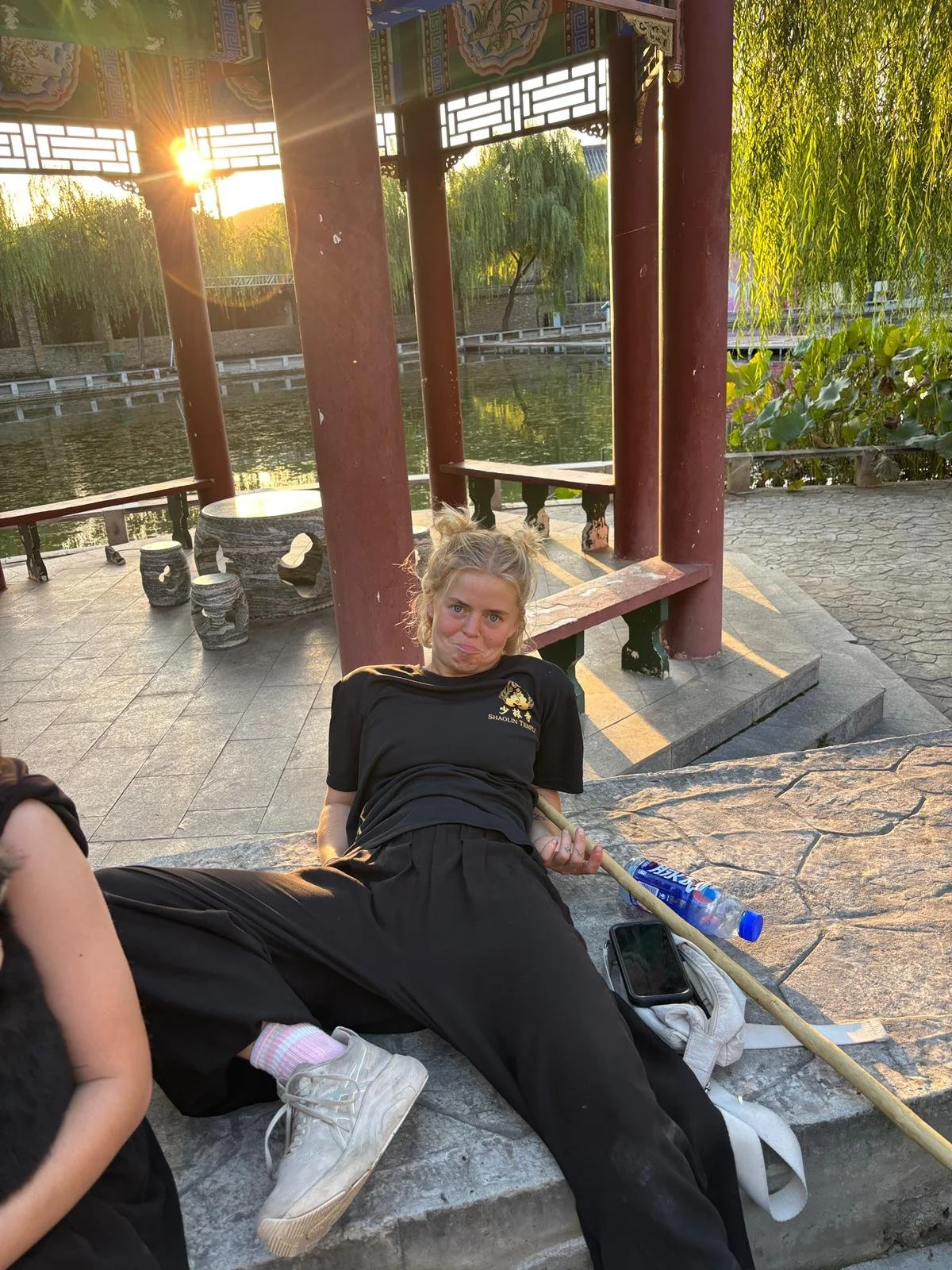
We usually had around three hours off over lunch. Initially, this seemed like an enormous amount of time. By the end of the first week, however, I understood exactly why we needed every second of it. We needed time to eat, digest, sleep, recover, practise our forms, play cards and generally hang out with the other students. The days were intense, and the breaks became an essential part of the routine.
In the afternoon, we learned our chosen weapons.
I chose the staff: a long bamboo stick traditionally associated with Shaolin martial arts. I loved the combination of strength, coordination, timing and control it required. There was something satisfying about learning to move with a weapon that looked relatively simple but demanded so much precision.
On Friday afternoons, we had our evaluations. We had to perform what we'd learned in front of the Shifus, who sat in a row watching in near silence. They had the most impressive poker faces imaginable. It was almost impossible to tell whether they were impressed, disappointed or simply thinking about what they'd have for dinner. You'd finish your performance, try to read their expressions, and then move on to the next thing.
There was something quite humbling about that. You couldn't rely on constant praise or reassurance. You just had to keep practising, accept the feedback and trust that the work was adding up.
04 - The mental side: Discipline, discomfort, resilience and what you learned about yourself.
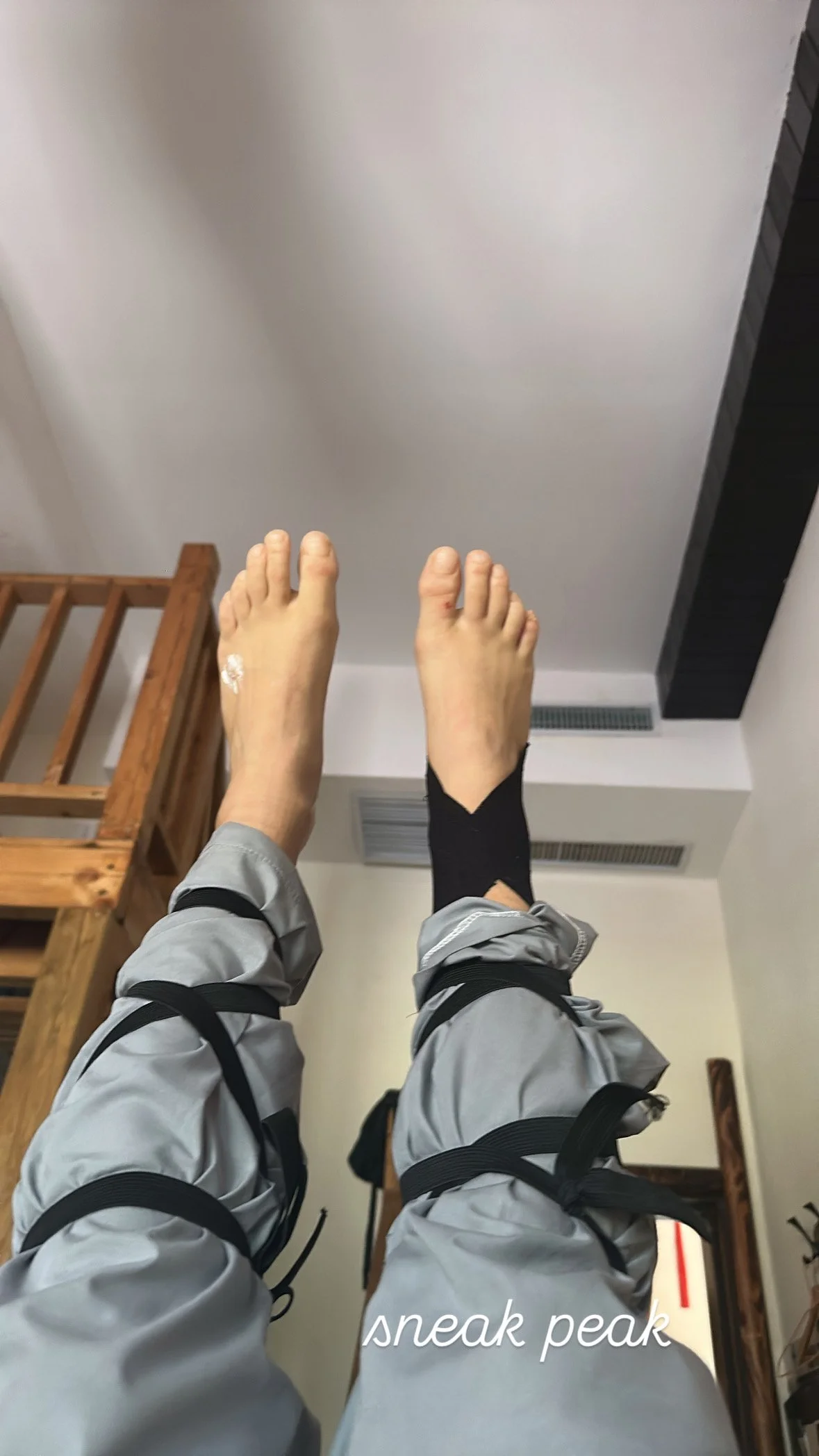
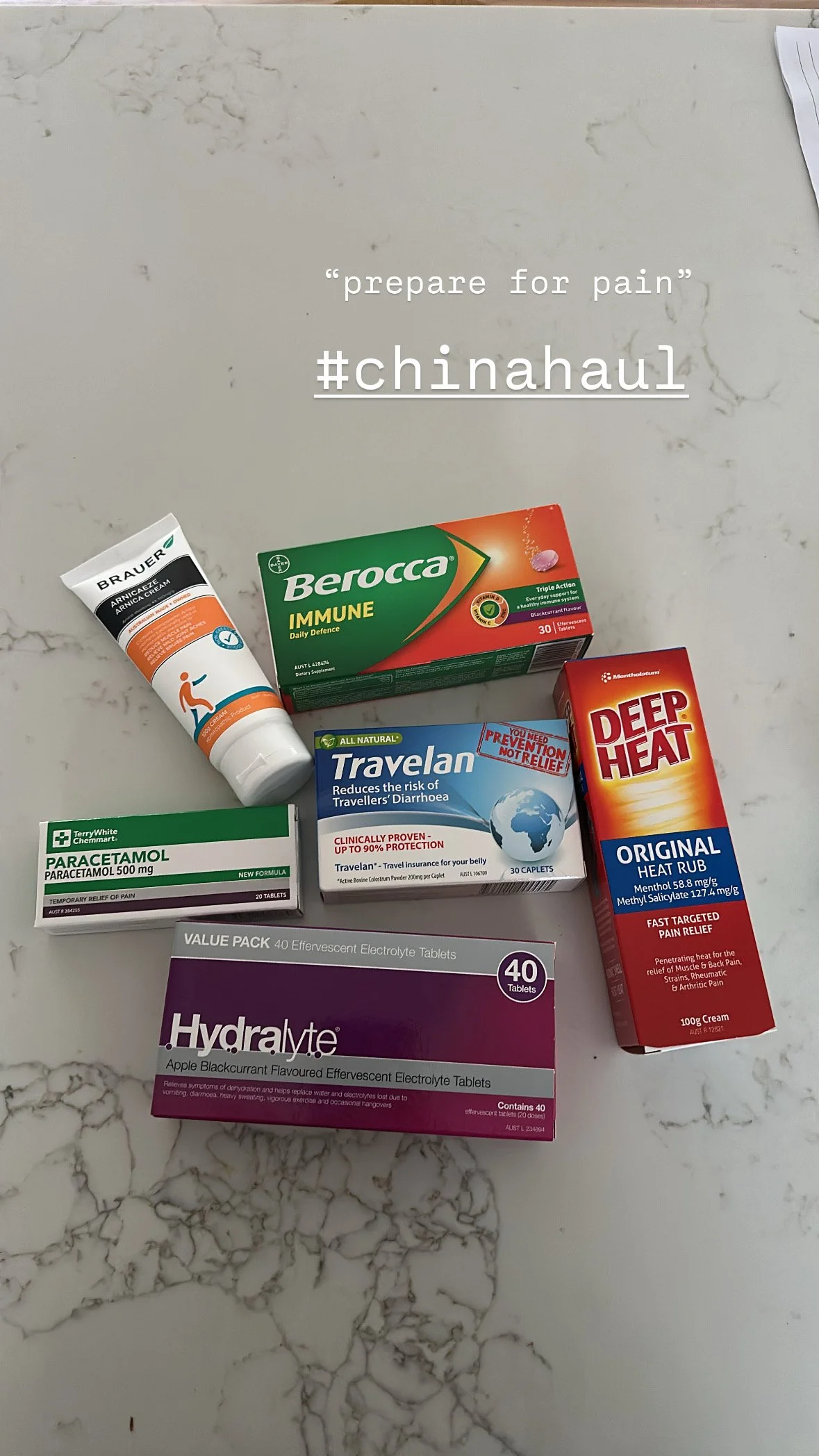
One thing I discovered in China that my body is bloody impressive but so is KT tape and tiger balm.
During the first week I managed to strap up my swollen ankle and get on with training as best I could. By the last week I was tape and painkiller free and jumping around like a frog on concrete with no pain whatsoever! I'm certainly not suggesting that pushing through an injury is always the answer. I was fortunate that my ankle improved, and the experience taught me a lot about respecting my body as well as challenging it.
But what I hadn’t expected was how much I would be challenged mentally. Before arriving, I already knew that I struggled to sit still. I'd much rather be challenged to do 100 press-ups than spend ten minutes sitting quietly with my thoughts. China made that very obvious.
Taiji and meditation required me to slow down, listen and detach from the constant stream of thoughts in my head. Instead of always looking for the next challenge, I had to pay attention to what was happening in the present moment.
Did I master meditation? Absolutely not.
I left China without feeling that I'd suddenly become a calm, enlightened person. My brain was still my brain. But I did learn patience. I learned that stillness was something I found difficult, rather than something I was incapable of. And I began to understand that this was a skill I could work on, just like a handstand, a press-up or a new kung-fu form.
I think there's something quite valuable about an experience that shows you where you're strong, but also where you have room to grow.
I'd arrived wanting to test my physical limits. I left with a much clearer idea of some of my mental ones. And, for once, I couldn't solve everything by doing more press-ups.
05 - Kung fu is family
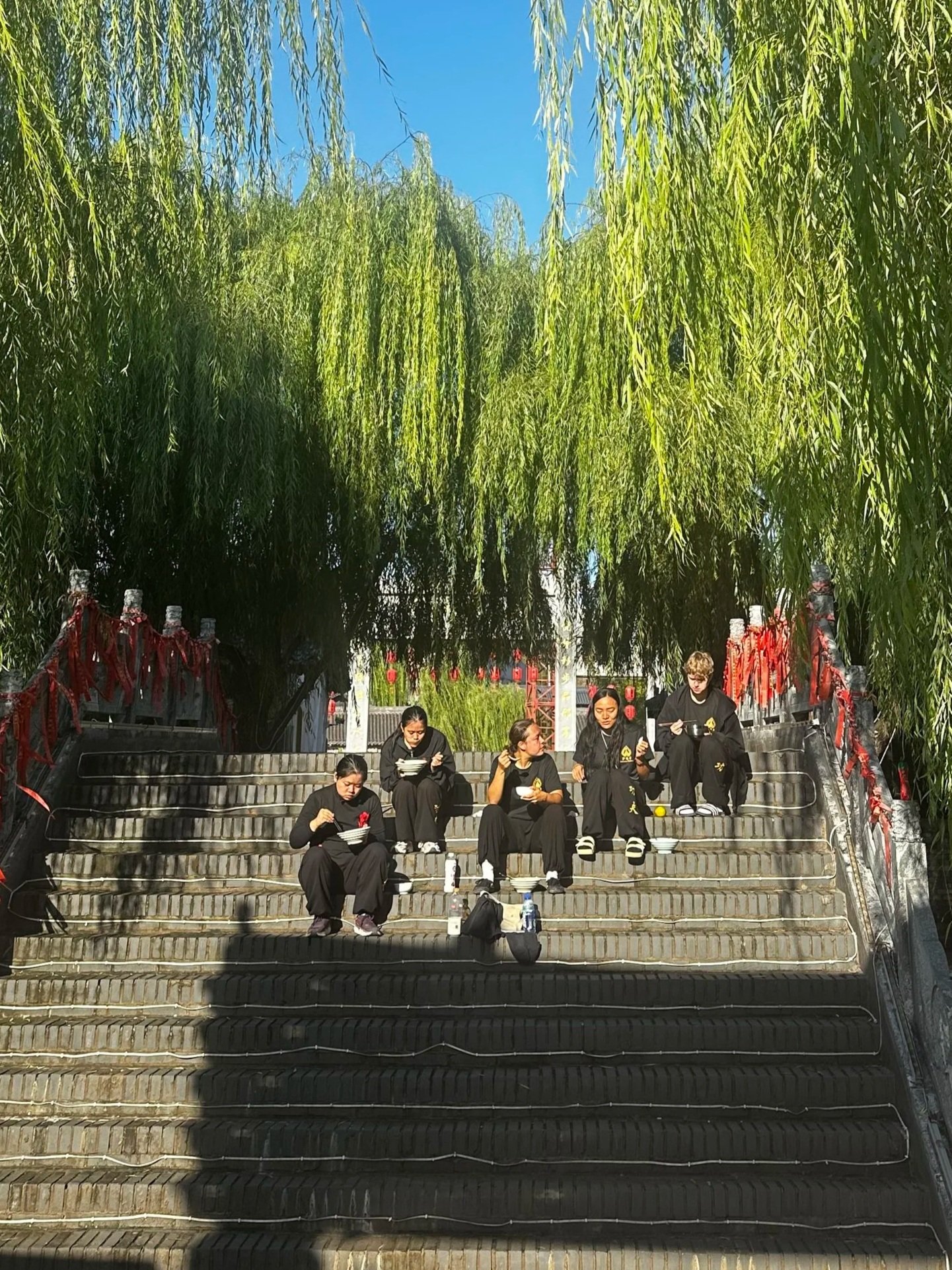
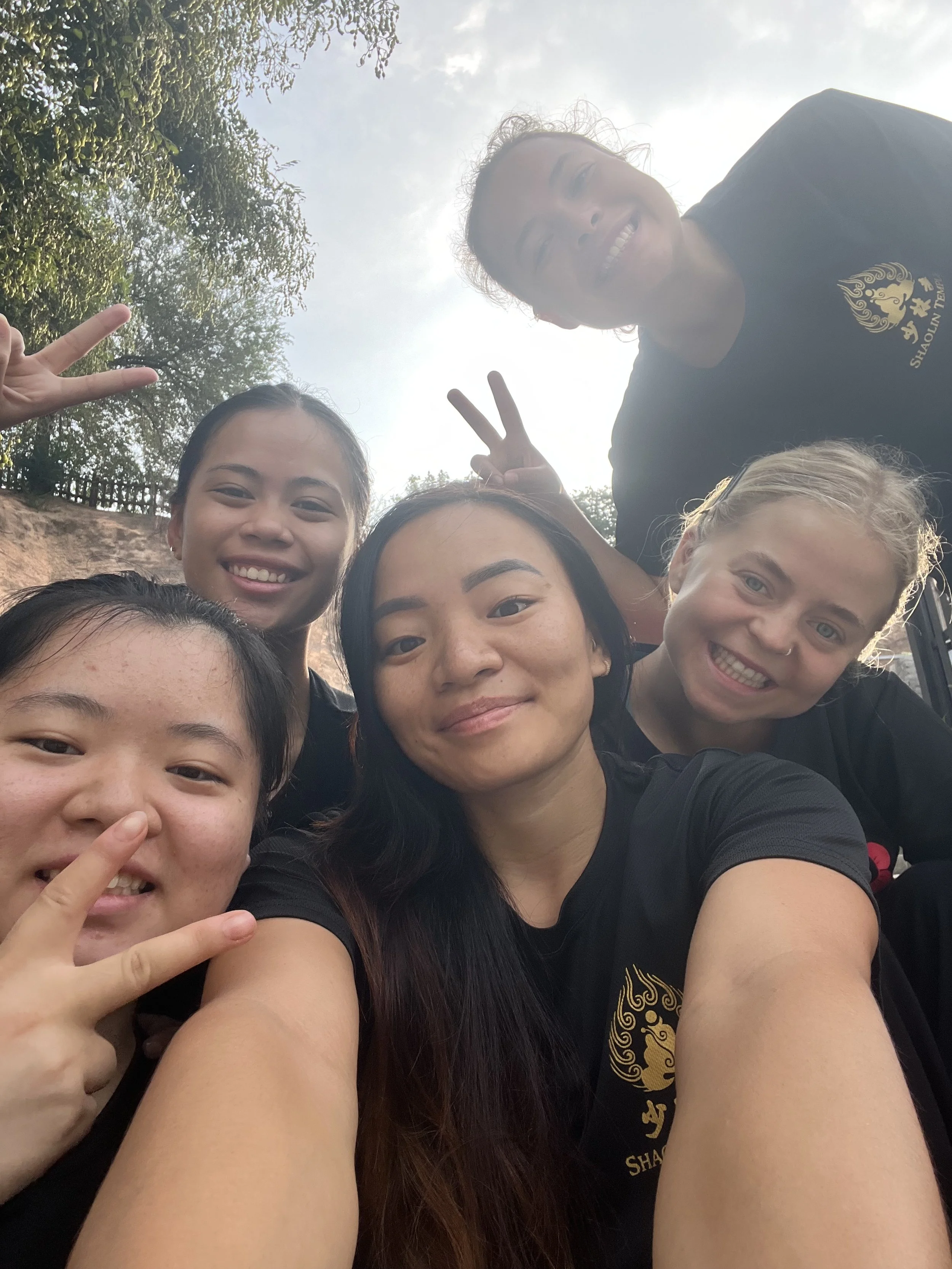
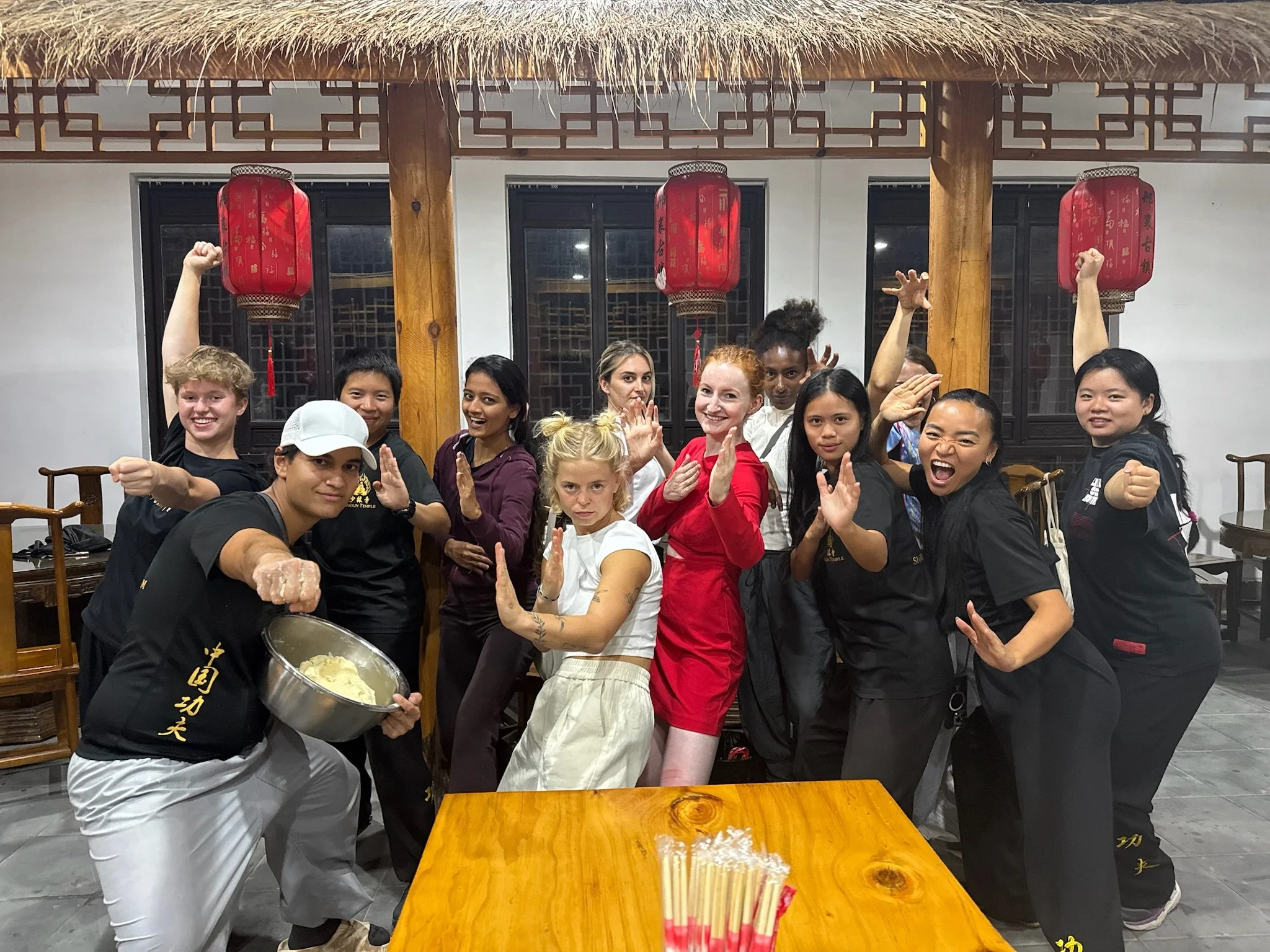
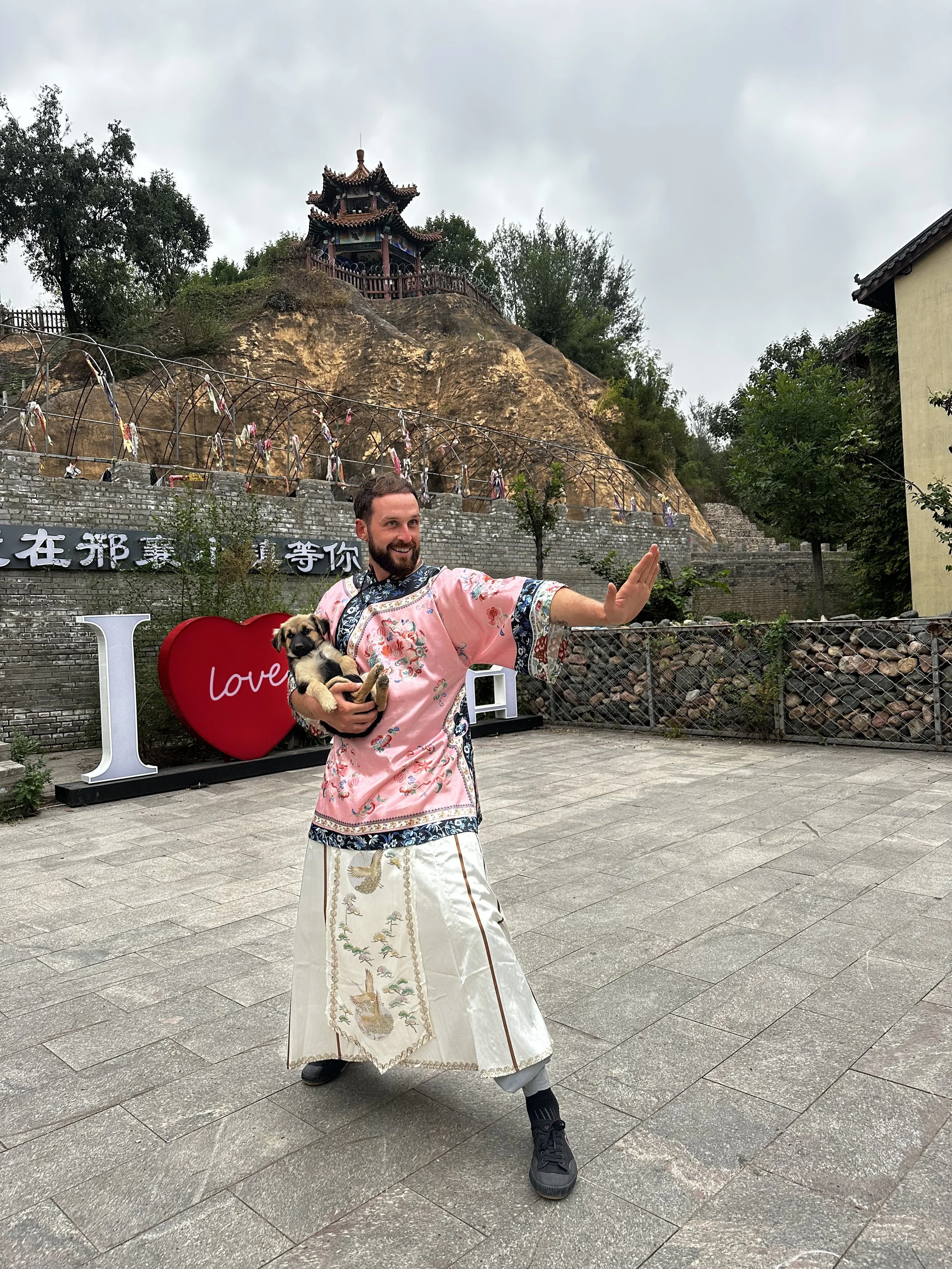
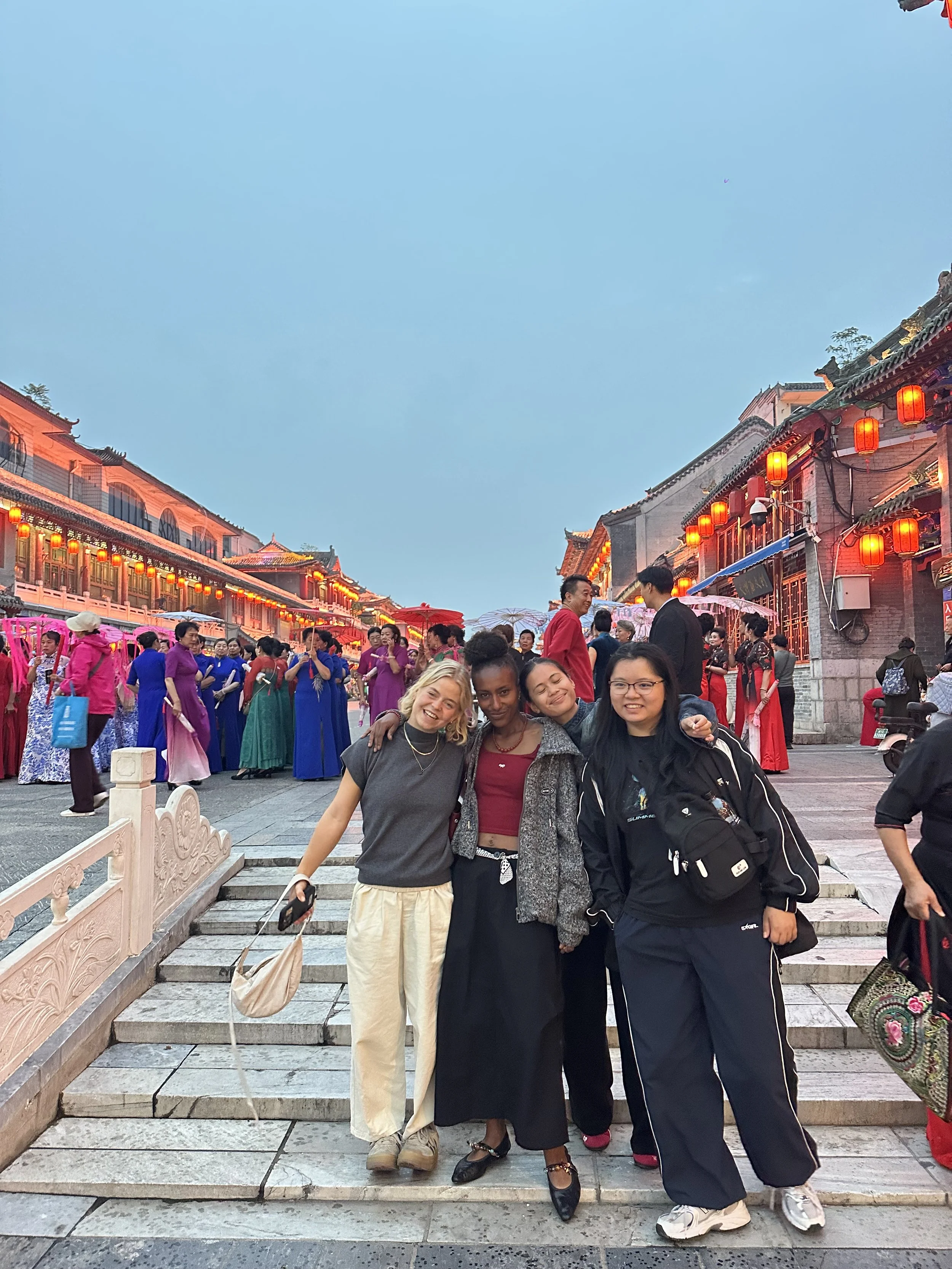
This was a phrase which got thrown around a lot over the month. Kung-fu is family. Before we even knew one another's names, we already had something in common. There is a particular kind of person who willingly pays to travel halfway across the world to spend their days being physically exhausted, pushed out of their comfort zone and humbled by a completely new discipline. We were all there because we wanted to challenge ourselves. We just came from different countries, backgrounds and walks of life. You see people when they're at their most tired, when they're struggling, when they finally get something right and when they have absolutely nothing left to give.
There's something special about that.
I was also the only person I met there whose first language was English. That made the experience even more interesting. Communication wasn't always straightforward, but connection didn't always require perfect words.
Friendships developed fast. So much happens in a single day that time starts to feel completely distorted. A day feels like a week; a week feels like a month. By the time our month was over, I'd formed friendships that felt far older than they actually were.
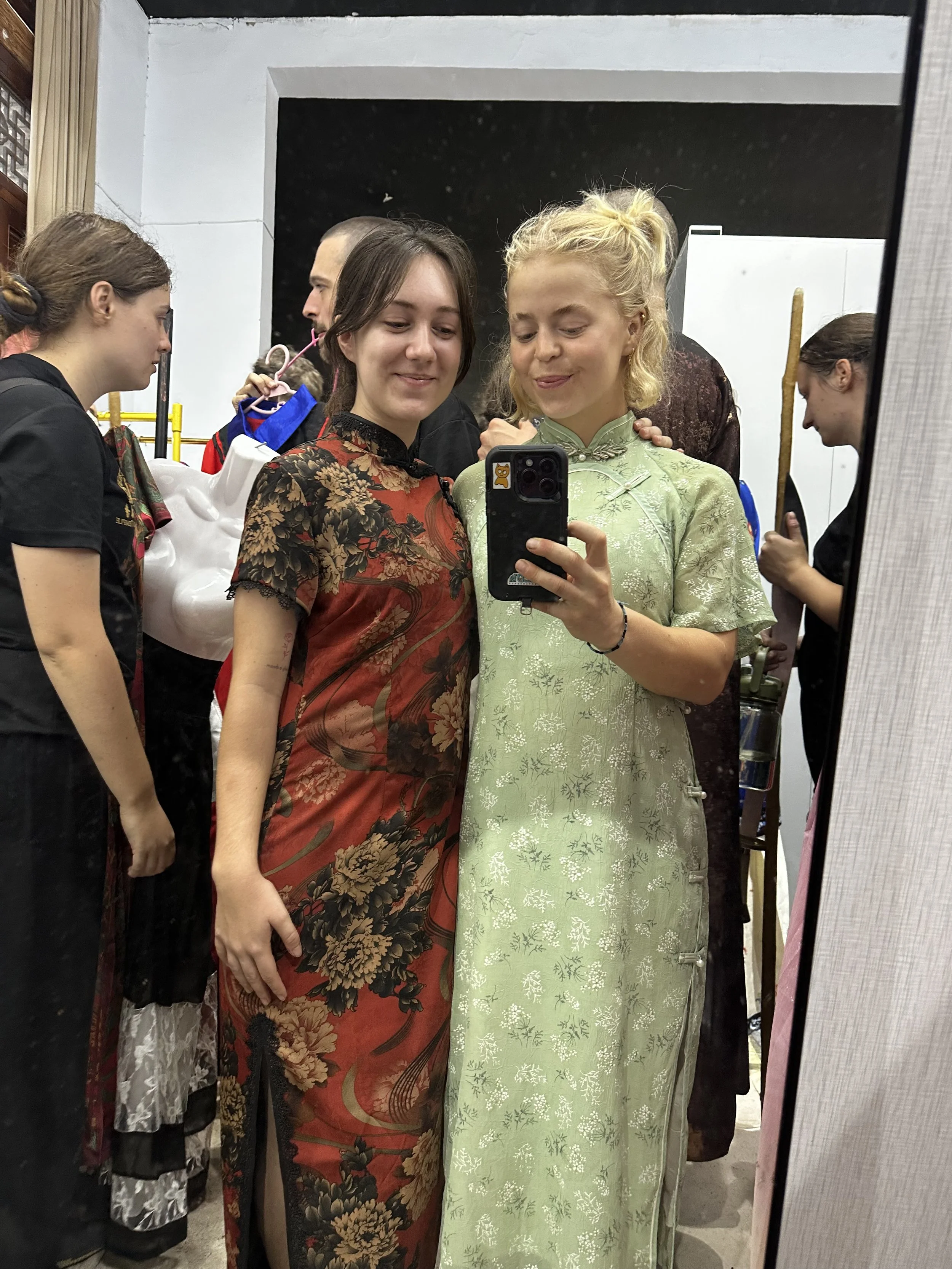
One particularly special friendship was formed with Leila. When I arrived clueless and frustrated due to being behind on learning the routines and forms. Leila took me under her wing and spent her free time bringing me up to speed and exercising her patience. From then we became each others stretching partners and soon after I had moved into her dorm and we became inseparable. We used to spend evenings sat down outside the village shop sharing a secret tinny of warm beer (not really allowed) and sharing stories about our childhoods, likes, dislikes and basically bringing each other up to speed on everything which had happened in our lives prior to coming here. Our relationships was so special -, however as Leila was staying 2 months longer than I was when it came for me to leave it was a turbulent emotional time. We shared written letters to each other and said our goodbyes – but we are very much still in touch, and this will be a friendship I will treasure forever.

06 - Would I recommend it?
Without hesitation.
Life is long, and there is so much time to do wonderful, unexpected and slightly ridiculous things if you want to. There is time for a career, stability and all the sensible things we feel we're supposed to be working towards. But there is also time to book a flight to China, live somewhere completely unfamiliar, learn something new and spend a month doing something that scares and excites you in equal measure.
Whilst I only went for a month, by the end of my four weeks I had settled into life at the school, become absorbed in the culture and built relationships that made leaving genuinely difficult.
My biggest regret? Not making more time to learn Mandarin or Chinese calligraphy. We had the option of online lessons in the evenings, but by 8pm I was usually so exhausted that the thought of doing anything other than showering and going to bed was laughable. In hindsight, I wish I'd made more of an effort.
If you're considering a similar adventure, my advice would be to go with an open mind. You don't need to be the fittest person there, and you certainly don't need to arrive knowing everything. You'll have good days and difficult days, and there will be moments when you question what you've signed yourself up for.
Go prepared to learn, to be uncomfortable, to get things wrong and to meet people who see the world differently from you.
If you've been thinking about doing something like this for a while, perhaps take this as your sign to look into it.
You will never get this exact version of your life back. There will always be reasons to wait, save more money, feel more prepared or do it another time. But sometimes, the things you remember most fondly are the ones you decide to do before you've worked out every last detail.

07 - The practical bits: What you should know before going
If by the end of this blog I have convinced you or affirmed your desire to go on your own little kung-fu adventure, here’s a little more about the school I went to.
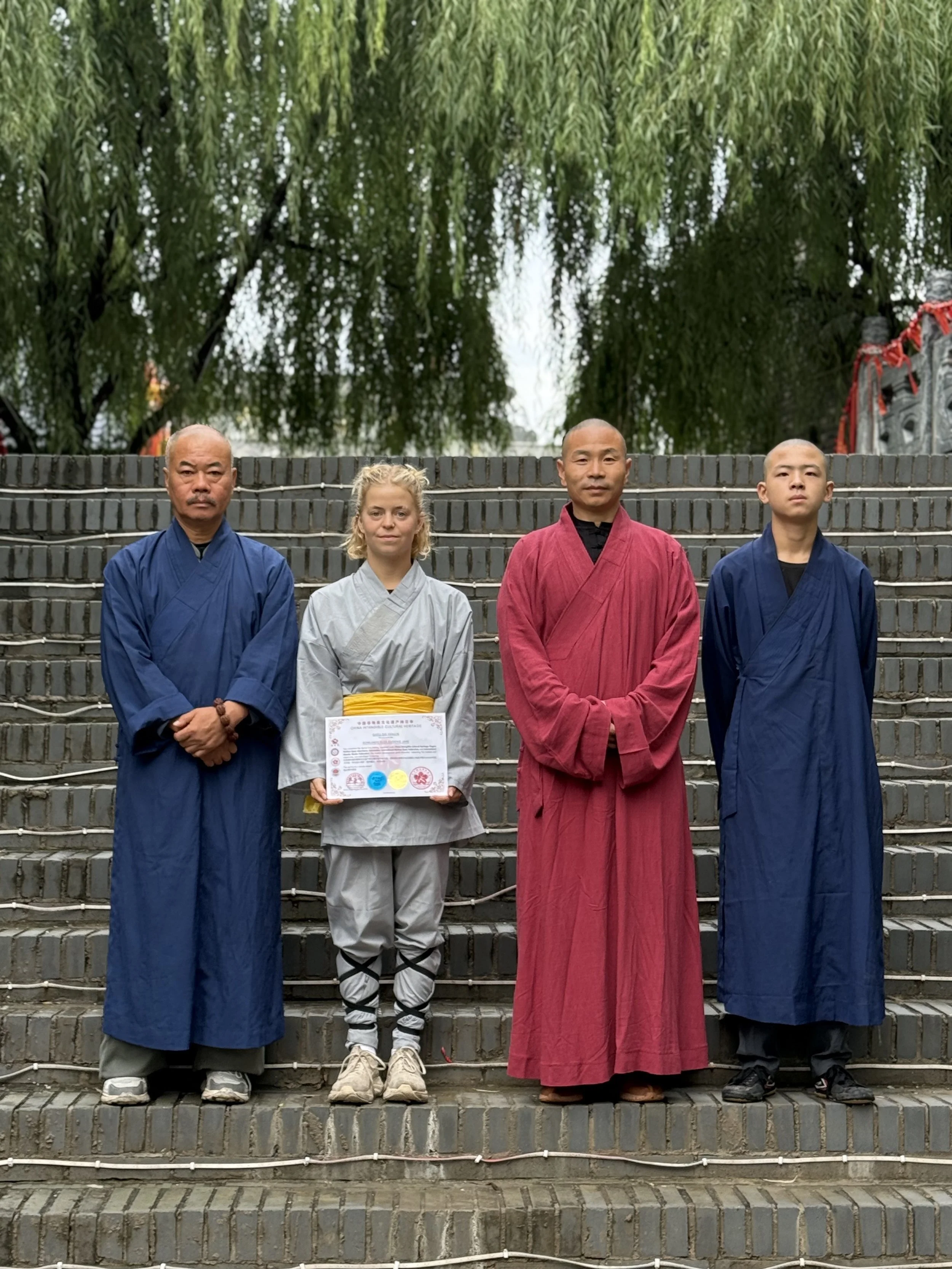
There are various schools available in China who welcome international students to train Kung-Fu. The school I trained at the Kung Fu School in Meihua Ancient Village, Xingtai, Hebei Province, China. They specialise Shaolin kung-fu, Meihua Quan, Taiji and other Chinese martial arts. The school is led by Shifu Shi Yanjun, who is a 34th-generation Songshan Shaolin master and a 17th-generation inheritor of Meihua Quan. You can find out more about the school, programmes, accommodation and prices on the official Living Kung Fu website.
1. Do you need to be fit or have martial arts experience?
One of my favourite things about the school was the variety of people there. All ages and abilities were welcome, and there was a four-year-old girl training alongside her mum! It wasn't just a group of super-fit martial artists who already knew what they were doing.
Obviously, the training is physically demanding, and your experience will depend on your ability, the sessions you choose and how much you want to push yourself. But you don't need to arrive knowing kung-fu. You're there to learn.
2. What was the accommodation like?
I'll be honest: the accommodation was okay, not luxurious. But you are going to rural China to train martial arts. However, one of the things that attracted me to this school was the smaller dorms. Some other schools I looked at had rooms sleeping up to 12 people, whereas here the shared rooms were limited to a maximum of three. There was also the option of paying extra for a private room.
A couple of things to be aware of: I had to pay extra for air conditioning, and the showers were cold. After a long day of training, a hot shower would have been lovely, to put it mildly! These were my experiences at the time, so I'd recommend checking the current facilities and any additional charges before booking. The accommodation options and room arrangements are outlined on the school's training information page.
3. How much does it cost?
It depends on how long you stay, the accommodation you choose and the programme you book. Roughly expect around £1000 per month for all your meals, accommodation and training. But you'll also need to factor in flights, travel insurance, visa costs and any extras. The school has its current training options and pricing on its official prices page.
I went for one month because that was what I could afford at the time, and it was enough to give me a taste of this completely different way of life. Saying that I would have happily stayed longer! I ended up spending around £2000 with flights and everything included, which given the experience and memories I got during that month, is incredibly high value for money. Also, China is cheap, so once your there you don't end up spending much
4. How do you actually get there?
I travelled to Beijing and then took a bullet train towards Xingtai before making the final journey to the school. The school provides guidance on travel arrangements and transfers, so I'd recommend contacting them before booking everything independently.
You'll also need to sort out the correct visa for your circumstances. Don't leave this until the last minute: my application involved a lot of paperwork and waiting around. Visa requirements have also changed, so check the current guidance with the relevant Chinese embassy or consulate before you travel.
5. My biggest piece of advice?
Do your research, ask questions and be honest with yourself about what you're signing up for. Check what's included, what costs extra, what the daily schedule looks like and what support is available if you get injured or need a break.
But don't let the fact that it feels like a big adventure put you off. Prior to this I had never flown before or planned a soli trip. I also had a sprained ankle and no previous experience of visiting an Asian country.
You don't have to have it all figured out before you go. Sometimes you just have to start looking into it.